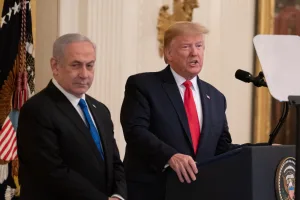
‘There would be no Israel without me,’ says Trump, asks Netanyahu to be ‘more responsible’ in Lebanon
“I have had a great relationship with Bibi. Now Bibi has to be more responsible with respect to Lebanon,” Trump added.
As leaders of the world’s most powerful economies gather in the French resort town of Evian for the 52nd G7 Summit, the diplomatic spotlight is expected to fall as much on a meeting outside the formal summit agenda as on the deliberations inside it.





File Photo: IANS
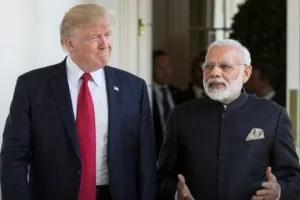
As leaders of the world’s most powerful economies gather in the French resort town of Evian for the 52nd G7 Summit, the diplomatic spotlight is expected to fall as much on a meeting outside the formal summit agenda as on the deliberations inside it. The scheduled bilateral engagement between Prime Minister Narendra Modi and United States President Donald Trump has emerged as one of the most anticipated encounters of the two-day gathering, carrying implications that extend far beyond India-US relations and into the wider questions of global security, trade and geopolitical stability.
Nestled between the French Alps and the shores of Lake Geneva, Evian has become the stage for a summit unfolding at a moment of exceptional international turbulence. Wars continue to rage, strategic rivalries are deepening, energy markets remain vulnerable to disruption and the architecture of global governance faces growing pressure to adapt to a rapidly changing world. Against this backdrop, the Modi-Trump meeting is being viewed by diplomats and observers as a key indicator of how two of the world’s most consequential democracies intend to navigate an increasingly volatile international environment.
Advertisement
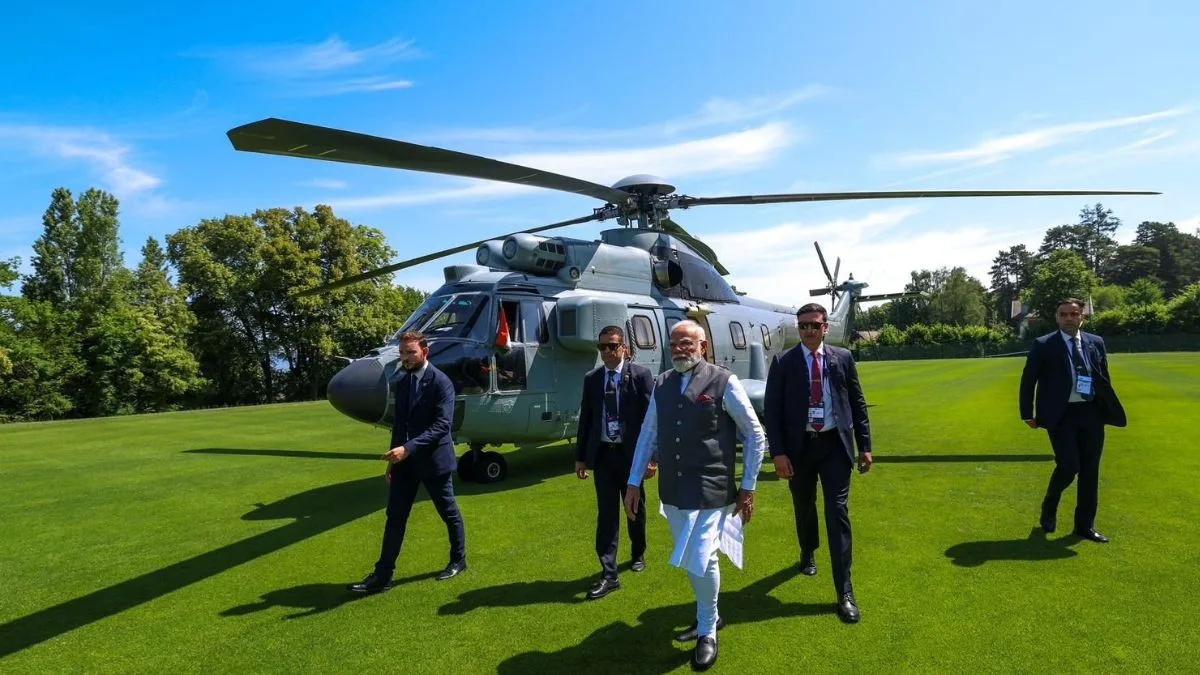
Prime Minister Modi arrived in France at the invitation of French President Emmanuel Macron, joining leaders from the G7 countries as well as invited partner nations including Brazil, South Korea, Kenya and Egypt. While India’s participation reflects its growing global influence, attention has quickly shifted to the expected conversation between Modi and Trump, whose return to the White House has altered diplomatic calculations across capitals worldwide.
Advertisement
The agenda for the Modi-Trump talks is expected to be extensive. Trade and tariff issues are likely to feature prominently as both countries seek to deepen economic engagement while addressing areas of friction. Energy security, a concern that has acquired renewed urgency in recent weeks, is also expected to dominate discussions. Equally important will be exchanges on regional conflicts, strategic stability in the Indo-Pacific, and the broader geopolitical shifts that are reshaping international relations.
The timing of the meeting has added to its significance. It comes immediately after Trump’s announcement of an agreement with Iran aimed at reopening the Strait of Hormuz and easing tensions that had rattled global energy markets. The narrow waterway remains one of the world’s most critical energy corridors, and any disruption to shipping through the strait has consequences far beyond the Gulf region. Although details of the agreement remain limited, world leaders arriving in Evian are expected to seek clarity on its implications for regional security, international shipping and global oil supplies.
For India, which imports a substantial portion of its energy requirements and maintains deep economic ties across West Asia, stability in the Gulf is not merely a foreign policy concern but a strategic necessity. New Delhi has consistently advocated dialogue and de-escalation in the region, making the developments around the Strait of Hormuz particularly relevant to India’s interests.
The issue carries an additional political dimension. There is considerable interest in diplomatic circles over whether Modi will raise concerns regarding reports that three Indian seafarers were killed during a United States naval operation targeting commercial vessels in the Strait of Hormuz.
The reported incident has generated political debate within India and placed an unexpected human dimension at the centre of broader geopolitical discussions. Any reference to the matter during the Modi-Trump talks would underscore New Delhi’s continuing emphasis on the safety and welfare of Indian citizens working across global maritime routes.
Beyond the bilateral engagement, the summit itself reflects the growing complexity of international affairs. According to the French presidency, discussions will focus on resolving major geopolitical crises, strengthening support for Ukraine and its people, protecting children from emerging threats including those in the digital sphere, combating organised crime and illicit financial networks, and reforming global governance mechanisms to make them more responsive to contemporary challenges.
The continuing conflict in Ukraine is expected to remain high on the agenda. More than four years after the war dramatically reshaped European security, fresh Russian attacks have underscored the persistence of the conflict and the difficulty of achieving a negotiated settlement. Ukrainian President Volodymyr Zelensky’s engagements with world leaders, including Trump, will be closely watched as Kyiv seeks assurances of continued support.
Yet even amid discussions on Ukraine, many leaders are expected to focus on developments in West Asia, where tensions have repeatedly threatened global energy supplies and international trade routes. The recent Hormuz developments have reinforced concerns about the fragility of critical maritime corridors and the interconnected nature of modern economic security.
Trump’s presence in Evian is expected to influence virtually every major conversation. Whether on trade policy, energy markets, security partnerships or regional conflicts, governments are looking for signals about Washington’s future course. As the leader of the world’s largest economy and a central actor in multiple international crises, Trump’s positions will inevitably shape both the formal outcomes of the summit and the informal diplomacy unfolding on its sidelines.
For India, the summit offers an opportunity to reinforce its position as a leading voice of the Global South while advancing its strategic partnerships with major powers. Over the past decade, New Delhi has steadily expanded its diplomatic footprint, positioning itself as a bridge between developed and developing economies and as an advocate for a more inclusive international order.
That evolving role is reflected in India’s growing presence at major global forums. No longer merely an invited participant, India has become an essential stakeholder in discussions ranging from economic resilience and technological cooperation to climate action and institutional reform. Modi’s meetings with world leaders in Evian, particularly with Trump, will therefore be viewed not only through the prism of bilateral relations but also as part of India’s broader effort to shape the global agenda.
French President Macron’s decision to invite a wider group of emerging and developing economies underscores a recognition that contemporary challenges cannot be addressed solely within the traditional framework of advanced industrial nations. The participation of countries such as India, Brazil, South Korea, Kenya and Egypt reflects shifting global realities in which economic growth, demographic influence and geopolitical relevance are increasingly dispersed.
As motorcades wind through Evian’s quiet streets and leaders gather behind closed doors, expectations remain high but so do the challenges. The summit convenes at a time when international institutions are under strain, geopolitical competition is intensifying and economic uncertainty continues to cast a shadow over global growth.
Against this backdrop, the anticipated Modi-Trump meeting stands out as more than a routine diplomatic engagement. It represents a conversation between two leaders whose countries play increasingly central roles in shaping the international order. Whether discussing trade, energy security, regional conflicts or the future of strategic partnerships, their dialogue is likely to offer important clues about the direction of India-US relations and the broader geopolitical landscape.
For a world searching for stability amid conflict and uncertainty, the exchanges in Evian may prove as consequential as any formal declaration issued at the summit’s conclusion.
Advertisement